
Bangladesh summoned India's Deputy High Commissioner to convey "deep disappointment" after Dr. Zahed Ur Rahman, an adviser to the Prime Minister, was stopped and questioned by immigration authorities at Delhi's Indira Gandhi International Airport. The incident led to Rahman's decision to return home despite being cleared to proceed.

US President Donald Trump lauded Prime Minister Narendra Modi's 'calm, cool, killer' persona at the G7 leaders' lunch in France, underscoring the deeply strategic relationship and formidable diplomatic skills of the Indian leader ahead of their crucial bilateral meeting.

Israel's Defence Minister Israel Katz declared that the Israeli military will not withdraw from its security zones in Lebanon, Syria, and Gaza, directly opposing the newly announced American-led diplomatic framework with Tehran. National Security Minister Itamar Ben-Gvir further asserted Israel's sovereignty, stating, "Trump's agreement does not bind us. Israel is not subject to the United States, and we are an independent and sovereign nation!"

Amidst rising Middle East tensions, External Affairs Minister S Jaishankar highlights India's strategic dialogue with Iran to safeguard maritime traffic through the Strait of Hormuz, ensuring India's energy security and continued oil trade.

The Congress party has criticised the Modi government over Pakistan's involvement in US-Iran peace talks, calling it a 'monumental setback' for India's diplomatic efforts.

Amid ongoing ceasefire negotiations, Israel is on high alert, fearing a potential surprise missile and drone attack from Iran targeting Gulf countries and Israel, according to intelligence officials.

Tensions in West Asia have dramatically escalated as Israel launched targeted military operations against Iran, triggering widespread blasts across strategic cities, following earlier Iranian projectile attacks on Israel.

US President Donald Trump has cautioned Israeli Prime Minister Benjamin Netanyahu that Israel risks international isolation if it resumes extensive military operations against Iran, following a volatile 24-hour period of escalating cross-border hostilities.

A potential agreement between the United States and Iran, including a comprehensive ceasefire and gradual lifting of US sanctions, may be announced soon, according to reports. The agreement aims to de-escalate tensions and establish a framework for resolving disputes.
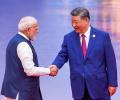
India's dual pursuit of a robust strategic partnership with Washington and a pragmatic, tension-management policy with Beijing represents the essence of modern multi-alignment. By embracing economic pragmatism, learning to compartmentalize political differences, and engaging in continuous dialogue, India can secure its borders, grow its economy, and contribute to a stable, multipolar Asian century, points out Ambassador Rajasekhar.

US Vice President J D Vance is currently in Switzerland, leading critical technical talks with Iran to advance diplomatic efforts on Iran's nuclear programme and secure a lasting ceasefire in Lebanon, following a recently signed memorandum of understanding aimed at de-escalating West Asian hostilities.
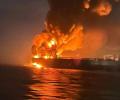
India's foreign policy establishment is adjusting with alacrity in real time -- an extraordinary spectacle in itself, considering the manifest reluctance to indulge in public diplomacy critical of American moves, observes Ambassador M K Bhadrakumar.

The Congress party has criticised the Indian government's diplomatic efforts, questioning how Pakistan was able to secure a role as a mediator between the US and Iran despite India's attempts to isolate it after the Pahalgam attack. The party also raised concerns about India's standing on the global stage and its relationship with the US and China.

US President Donald Trump has dismissed media reports suggesting that diplomatic negotiations between Washington and Tehran have stalled, maintaining that dialogue persists despite intensifying geopolitical friction across the Middle East.

For the foreseeable future, the most likely outcome remains continuation of the status quo. Taiwan will remain self-governing without formally declaring independence, while China continues to apply sustained pressure short of war, predict Krishnan Srinivasan and Manoj Mohanka.

In the present hyper-connected world, there are many domestic and global factors that affect financial markets. Of them, the most powerful and often least predictable are geopolitical events, which often boil down to one diplomatic headline.

The Beijing summit may have reduced immediate diplomatic uncertainty, but it did not resolve the deeper structural contest between the United States and China. That contest appears likely to define the coming decade, notes Varun Arya.

While the Andaman and Nicobar islands serve as a vital, stationary asset for projecting power in the Indian Ocean, referring to them as an unsinkable aircraft carrier ignores key military and geopolitical limitations, explains Commodore Venugopal Menon (retd).

Sonia Gandhi criticised PM Modi's Israel visit, calling it a "bewildering strategic decision" amid the regional conflict.

A source familiar with US Treasury Secretary Scott Bessent's thinking revealed on Saturday that the department "intends to utilise all available authorities to make Iranian assets accessible for rebuilding and repair efforts related to any future damage inflicted by Iran."

Srivastava warned that continued bombing of Iran by the US and Israel could severely undermine any prospects of reopening critical maritime routes through negotiation with Tehran.

'The flip side of this is that he won't hesitate to call out India if he thinks its policies are hurting US economic interests or border US foreign policy goals.'

Both sides have now revealed a preference for escalation over strategic defeat, and each new provocation narrows the space for the next pause. The Touska seizure, Iran's refusal to negotiate under blockade, Israel's strikes on Iranian oil infrastructure -- all of these add up to an increasingly untenable situation. This makes the wild card -- Trump and his motormouth -- more consequential than ever, notes Prem Panicker in his must read blog on the Iran War.

As many as 35 vessels, including cargo carriers and oil tankers, successfully navigated through the strategic maritime chokepoint of the Strait of Hormuz over the last 24 hours, according to Iran's state media reports citing a formal declaration by the Islamic Revolutionary Guard Corps (IRGC) Navy.

Donald Trump has issued a stern warning to Iran, stating that the US will take a tougher stance if a diplomatic resolution regarding its nuclear programme is not reached soon.

Through his commitment to democratic norms, debate, dissent and constitutionalism, Jawaharlal Nehru helped ensure that parliamentary democracy took deep root in independent India. Utkarsh Mishra evaluates Nehru's 17 years as India's first prime minister, examining his role in nation-building, democratic institution-building, economic planning, scientific advancement and foreign policy.

US President Donald Trump and Israeli Prime Minister Benjamin Netanyahu had a tense phone call over the future course of the war on Iran, with Washington favouring a deal instead of resuming strikes, according to US media reports.

These modern Hindi films proved that the love triangle still has enough heartbreak, passion and chaos left to captivate audiences.

US President Donald Trump is inclined to reject Iran's latest diplomatic proposal, which suggests restoring maritime traffic through the Strait of Hormuz while deferring nuclear programme concerns, according to CNN. Concerns remain over Iran's nuclear enrichment and internal government fractures.

Iran has submitted a fresh proposal to regional intermediaries offering to cease its military operations in the Strait of Hormuz, contingent upon a complete cessation of hostilities and the removal of the US blockade on Iranian maritime hubs.
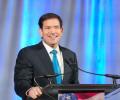
US Secretary of State Marco Rubio has said that the US is ready to sell as much energy as India is willing to buy. He described India as a 'great partner' ahead of his visit to New Delhi.

An Iranian tanker successfully bypassed the US Navy to deliver crude oil to the Asia-Pacific region, despite ongoing tensions and a US blockade.

Prime Minister Narendra Modi and US Secretary of State Marco Rubio discussed various aspects of India-US bilateral ties, focusing on defence, trade, energy, and technology. Rubio extended an invitation from President Donald Trump for PM Modi to visit the US.
US President Donald Trump on Tuesday claimed that Iran is in a "state of collapse" and has requested the United States to help "open" the Strait of Hormuz.

Iran has lodged a formal complaint with the United Nations, accusing the US of engaging in 'piracy' following the seizure of Iranian vessels. The complaint was detailed in a letter sent by Iran's UN envoy to the UN Secretary-General and the Security Council.

This sharp Iranian response came after a series of uncompromising remarks from the US president.

Following his visit to China, US President Donald Trump has suggested a potential shift in Washington's approach to Taiwan, expressing reluctance to engage in military conflict over Taiwan's independence and cautioning against unilateral moves.

The Congress party has criticised Prime Minister Narendra Modi's diplomatic efforts following the ceasefire agreement between the US and Iran, facilitated in part by Pakistan. The party claims this development undermines Modi's strategy and exposes his perceived failures in foreign policy.
For India, China's Indian Ocean power projection, maritime domain awareness, dual-use ports, underwater surveillance, antisubmarinewarfare, naval exercises with Pakistan, pose considerable pressure, depleted India's strategic depth and marginalises Indian role, points out Srikanth Kondapalli.

India would confront a more entrenched China, a less dependable United States, and a regional order increasingly shaped by great-power bargaining over which it exercises limited influence, notes Amberish K Diwanji.
